


It's Not A Fuckin Dolphin. Brighton's Big-Lipped Lie
- gnosticmystic67
- Jul 18, 2025
- 7 min read

Updated: Jan 1

You’ve seen them. Brighton’s beloved “dolphins.” Big lips, stubby snouts, slightly insane menacing sharp toothed grin and the dead-eyed smile of a creature that’s definitely not OK. Or about to let you playfully swim with it, telepathically sharing its joy.
Officially? Dolphin lamp posts. Reality? A wonderful pile of symbolic, heraldic, maritime colonial nonsense —and not one inch of it resembles an actual dolphin.
Let’s be clear: dolphins are sleek, intelligent, long-snouted beings. These… things? London sea-serpent-merchant-guardian war totems that somehow washed up on the coast with a name no one bothered to correct.
So Why Is It on the Shield?
The “dolphin” shows up everywhere in Brighton —not just lamp posts, but fountains, buildings, the city crest.
The answer? It was never a dolphin. It was a symbol — and a territory marker.
Imported from London’s civic designs in the 1800s, the creature (technically a “delphin”) was borrowed from Roman sea beast myths, merchant heraldry, and Masonic iconography.
Brighton’s 19th-century makeover — from Brighthelmstone to Brighton, from spiritual to spectacle — came with new lights, new names, new alliances. And with them came the sigils.
The delphin was part of a larger language. One that said:“This space now serves the sea trade, the city machine, and those who move through it.”
So yes — it’s on the shield. And the fountains.And the lamp posts.
But it was never a dolphin. It was a claim.
The Creature Itself


(a.k.a. “It’s Not a Fuckin Dolphin, and You Know It”)
Let’s break this down with precision, laughter, and undeniable truth.
Let’s start with a fact: A dolphin — a real dolphin — has:
A long, sleek snout
A streamlined body
A dorsal fin
Eyes that suggest intelligence, playfulness, or otherworldly grace
Zero resemblance to a demonic Disney dragon sea-serpent, with little comedy wings
Now… compare that to this:
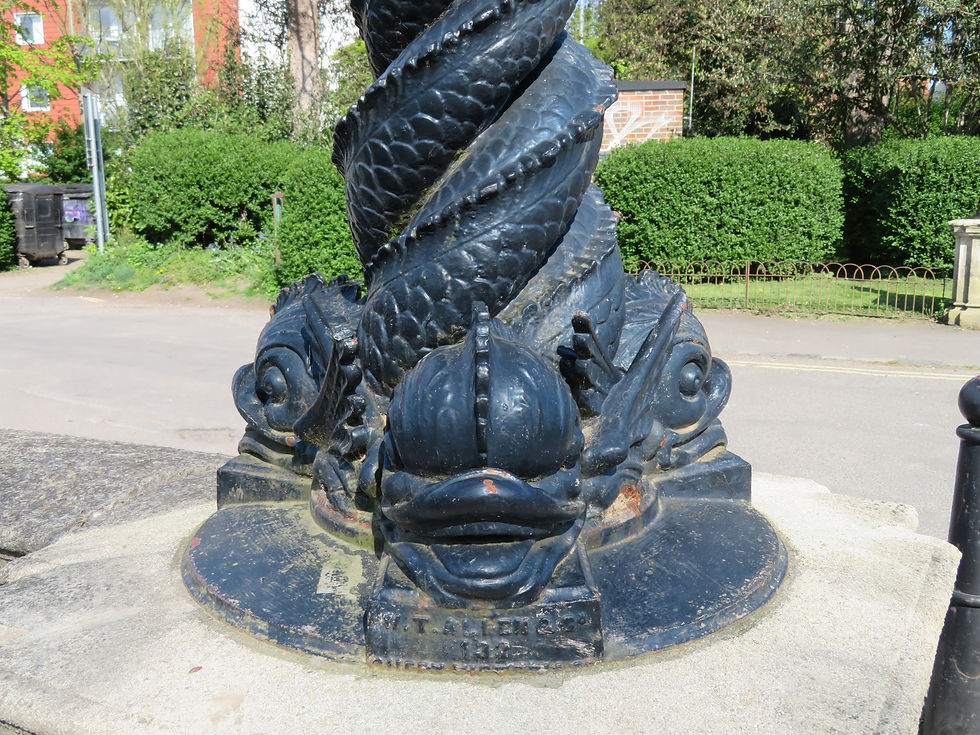
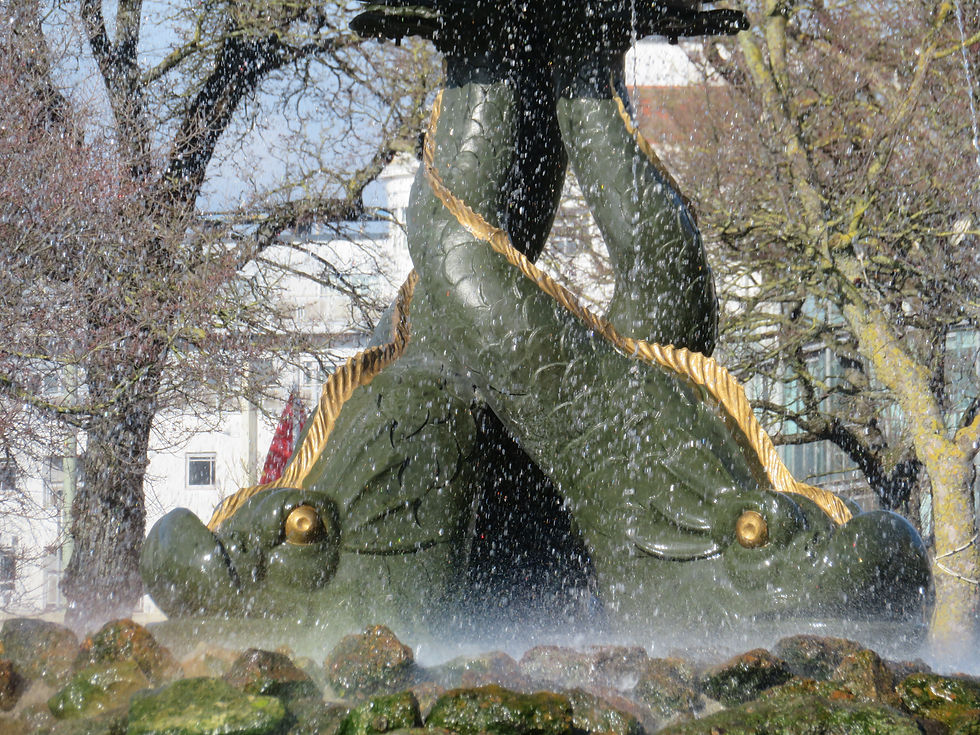
What even is this?
Dorsal fin full length of spine
Lip filler addiction derangement
Forehead rage
Fish body, dragon brow
A look in its eyes like it’s seen the underworld and didn’t mind it; and would love to take you on a journey there.
This isn’t marine biology. This is heraldic theatre. A myth-beast. A “delphin.” A creature that was never meant to look like a dolphin, because it was never meant to be one.
Historical note:The word delphin comes from heraldic tradition, not science. It refers to a sea beast, often snarling, scaled, sometimes winged —used on coats of arms and naval insignia, not educational posters in an aquarium.
The Brighton “dolphin” fits that lineage perfectly.
So what are we actually looking at?
A symbolic hybrid
A merchant-summoned sigil-beast
Possibly a low-ranking sea daemon with union ties to Victorian street lighting projects
You’re not meant to understand it. You’re meant to accept it.
And for almost two centuries, we did.
But now? Now we say it out loud.
What It Actually Is
Heraldry, Trade, and Delphinology
So if it’s not a dolphin —what is it?
The answer lies not in biology, but in heraldry —and the weird aquatic theatre of empire, trade, and coded symbolism.
Meet the Delphin


In heraldic tradition, what you’re seeing is called a delphin.Not a dolphin. A delphin.A grotesque, often snub-nosed, lip-heavy, fin-winged sea beast used in:
Naval insignia
Family crests
Royal armorials
East India Company architecture
And the maritime city sigils of the old European empires
These weren’t cute.They were power marks. Totems of sea mastery — signalling naval dominance, trade access, and territorial control.
The delphin says:"This space is under maritime command." It doesn’t swim.It guards.

🏛️ From Rome to the Thames
The delphin traces back to Roman sea mythology, where hybrid monsters guarded harbours and ports.Later, through the rise of heraldry, it was adopted by the merchant aristocracy and naval lodges of Europe —particularly in England, Venice, and colonial France.
It appeared carved on docks and doorways
Cast in iron across bridges and embankments
Printed on maps and coins
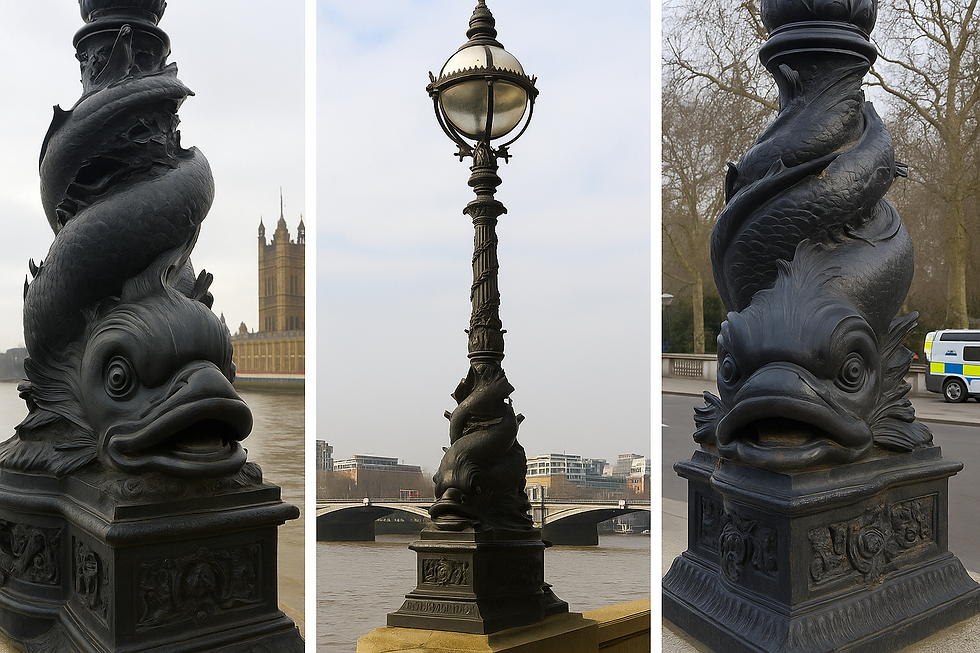
In London, it became part of the Vauxhall ironworks language —most famously appearing in the Thames Embankment lamp posts (circa 1870s), designed by George Vulliamy.
From there, it spread via replication — including down to Brighton.
Why Brighton?
Because Brighton, by the early 1800s, was being refitted:
From fishing village to fashionable hub
From Brighthelmstone to Brighton
From free-flowing node to stage-set with symbols
The delphin arrived as part of this new story —not just on lamp posts, but fountains, stonework, and civic seals.
It wasn’t about marine celebration.It was about ownership.
This creature isn’t Brighton’s mascot. It’s Brighton’s sigil of submission. A mark that says:"We belong to the machine now."

And once the “dolphin” was placed, Brighton’s submission wasn’t declared. It was styled
Why This Matters?
(a.k.a. The Part Where We Gently Lose Our Minds)
Okay, so maybe this was just a funny post about Brighton’s weird lamp posts.Maybe it was just a local roast with extra sauce.
But you’re still here, reading.And now things are feeling a little… different.
That’s because this isn’t just about dolphins.It’s about symbols, and what happens when we forget how to read them.This isn’t about academic citations.It’s about signal literacy.The ability to feel when something doesn’t sit right —then follow the threads until it does.
We invite you to do that.To see more than what’s being shown.To ask why there’s a smiling fish-demon where a dolphin should be.
Because once you see that?You can’t unsee anything else either.
🧭 Symbols Are Language
Every symbol you see — every creature, crest, motif or mural — is saying something. Whether or not you’re listening.
If you don’t know what a symbol means, that symbol still speaks. You just won’t know who it’s speaking to.
And Brighton?It’s whispering all over the place.In stone. In cast iron. In lip-heavy sea beasts on your walk to the Co-op.
These aren’t decorations. They’re designations.
They mark:
Civic transformation
Merchant incursion
Ownership, domain, authority
Territory no longer spiritually neutral
They’re not meant to make sense.They’re meant to be accepted without question.Because the moment you question it, the illusion begins to bend.
We joke because it’s funny.But we write it down because it’s true.
Brighton was once something very different. A river city. A node. A spiritual-liminal weather vane. Even Cobbett and Talleyrand knew it.
And then, slowly —through cast iron, crests, “dolphins,”and the theatrical soft-lens overlay of seaside fun —it became something else.
Not bad. Not ruined. But re-scripted.
So Why This Blog Post?
Because noticing one “dolphin” is funny. Noticing twenty of them is a pattern. And following that pattern?
That’s how you start to uncover the field beneath the theatre.
So laugh. Look. Reclaim the story.
The dolphin is just the beginning.
Sources & Field Note
(a.k.a. Here’s Where to Dig if You Want the Meat)
You’ve laughed.You’ve nodded.You’ve stared long into the abyss of Brighton’s lips.
Now — if you want to trace the line, here’s the breadcrumb trail.
Key Names & Dates
George Vulliamy — Architect of London’s Thames Embankment lamp posts (c. 1870)
Introduced the “dolphin” (delphin) design that spread to Brighton and beyondCheck: Thames Embankment Lamp Standards
Brighton Corporation — Formed 1854
Major civic overhaul period, including promenades, fountains, gas lighting. From Brighthelmstone → Brighton
Delphin (Heraldry)
Mythic sea-beast used in naval insignia, coats of armsOften shown curled, snarling, symbolic of sea command. Check: A Complete Guide to Heraldry by A.C. Fox-Davies
Phoenician Influence / Sea Trade Sigils
Symbols embedded into port cities via merchant lodge networksThe sea beast as protector, trader, emissaryEchoes in East India Company and Venetian heraldry
Cobbett’s Writings on Brighton
William Cobbett’s praise of Brighton as “the most beautiful town in the empire” Pre-municipal transformation observations — look to Rural Rides
Brighton’s Lost River
The Wellesbourne — flows under Pavilion Gardens. Now hidden, redirected, symbolically buried during civic restructuring
🧭 Personal Sources from the Field
You might also find:
Local archive books from 1800s Brighton
(Two first editions are in the author’s own hands. Trust that.)
Old Maps
Look for pre-1850 land design, water routes, original street lines
London–Brighton civic crossover
Where the iconography travels, so does the influence
Closing Transmission
This creature isn’t Brighton’s mascot. It’s Brighton’s most casual cosmic comedic sigil of submission, hidden in plain sight. A mark that says: We belong to the machine now.

Transmission Ends, But the Signal Remains
Brighton isn’t just decorated. It’s encoded...
(What You’re Looking At, and What’s Looking Back)
You came here for a dolphin. What you found was a gate.
A creature that doesn’t match its name. A city that doesn’t match its surface. And a history that doesn’t match its retelling.
This Wasn’t About a Lamp Post
It was about:
Pattern recognition
Symbol literacy
Field memory
And the quiet moment where something in you says:
“Wait… that doesn’t belong here.”
That’s where it always starts.
Because once you see it —once you spot the thing that doesn’t quite fit —you’re already halfway out of the overlay.
Brighton Isn’t Just a Seaside Town
It’s a compressed archive.
Of sacred geometry. Of buried water. Of repurposed names. Of signals in plain sight.
And the “dolphin”? That’s the loudest whisper of all.
So next time you pass one —on a post, a fountain, a shield —just pause. Let your eyes soften. Feel what it really is. Not a joke. Not a dolphin. Just a mouthpiece from another time still doing its job — until someone names it.
You just did.


Comments